Exploring our rivers: The River Dôn Engagement Platform
A digital engagement platform helping people notice, value and care for their local waterways throughout South Yorkshire.

- Client
- Opus Independents
- Who they are
- Opus is a worker-owned social enterprise.
- What they do
- They aim to find systemic responses to society’s most complex problems. Since 2008, they've hosted projects in the city that further the conversation around issues like poverty, inequality and climate breakdown.
- Location
- Sheffield
- Requirements
- Build an engagement platform for the River Don, which will create the means for the river to build its visibility, articulate its own agency and enable the conditions for people and communities to observe, explore and cultivate their relationships with the natural environment and the other-than-human world.
problem
The team at Opus identified a problem with our lack of understanding and connection with our rivers, particularly the River Don in Sheffield. By not realising the importance of our waterways, we are further contributing to the global problem of nature disconnectedness, a problem which is negatively affecting our planet, our homes, and our health.result
We’ve helped design and build an online platform that gives people a new way to connect and advocate for their local environment.Alban Krashi, Opus IndependentsI have found the patience that Hive have brought considerate, their willingness to go on a journey where the destination is yet to be solidified has been unexpected and critical. The support in their capacity and collaborative approach has made where we are possible. And the joy of working with the team is a highlight of the experience. The process of working with Hive has made the RDP stronger in every component and possible to the scale we require! A process where collaboration, care and curiosity have strengthened the project.
What did we do?
We worked closely with Opus, Dark Matter Labs, Sheffield Hallam University and Lawyers for Nature, along with other partner organisations, to develop the MVP (minimum viable product) of The River Dôn Engagement Platform. This platform aims to be a space for people to share, grow and better understand their relationships with the river and the rest of the other-than-human world.
Dark Matter Labs, a non-profit organisation, focuses on building new “Institutional infrastructure” for societies. They have been instrumental in developing the ‘Living Stewardship Agreement’ as part of the wider River Dôn infrastructure, which recognises and maps out acts of care and stewardship to aid the rights of nature.
Meanwhile, Sheffield Hallam University has contributed by conducting research to inform the platform’s features and functionality. Lawyers for Nature have explored the possibility of granting the river legal personhood, further emphasising the need for a new relationship with our natural world and environment.
Urban Flows Observatory have deployed weather sensors to improve our understanding of ‘how the physical (energy and material resources) metabolism of cities can be effectively measured, understood and utilised.’ We hope to integrate with the data technology behind this, so that the Engagement platform has another layer of information on precipitation, other weather occurrences, and the implications of these on biodiversity.
As a collaborative, we have all sought to deeply understand the role of rivers in daily life, such as:
- How communities engage with nature
- The barriers that prevent users and communities from participating and contributing to the online platform
- How people engage with one another around the river
This collaborative effort led to the co-design of the River Dôn Engagement Portal, a digital platform designed to encourage curiosity, care and connection. Essentially, an engagement platform that can begin to tell us what the river needs and how we can provide for it.
Workshops and Research
We conducted a series of workshops to better understand the problem, define the users and gather insights.
Our workshop process involved:
- Problem framing workshops
- User definition sessions
- Stakeholder and financial funder mapping
- Understanding user needs
- Data exploration
The project brief was quite broad, which allowed us to collaborate closely with partners. We started focusing on the core issues we aimed to address and ran several sessions to explore different aspects of the problem and possible solutions.
We kicked off with various workshops to frame the problem. These sessions helped us establish a shared understanding of what we needed to solve and identify how we could measure success.
Next, we mapped out all the stakeholders involved in the project, which was a substantial task. This involved recognising all the key players connected to the River Don and its watershed, as well as potential funders for the project’s various stages and features.
After that, we held user definition sessions to identify who might use our platform and who would be impacted by it. This led to further workshops focused on understanding the needs of these users and how they relate to the river.
Finally, we performed desk research and conducted additional workshops to explore publicly available data sources that could enhance our solution and discover compelling user-generated content.
Co-creation Workshops
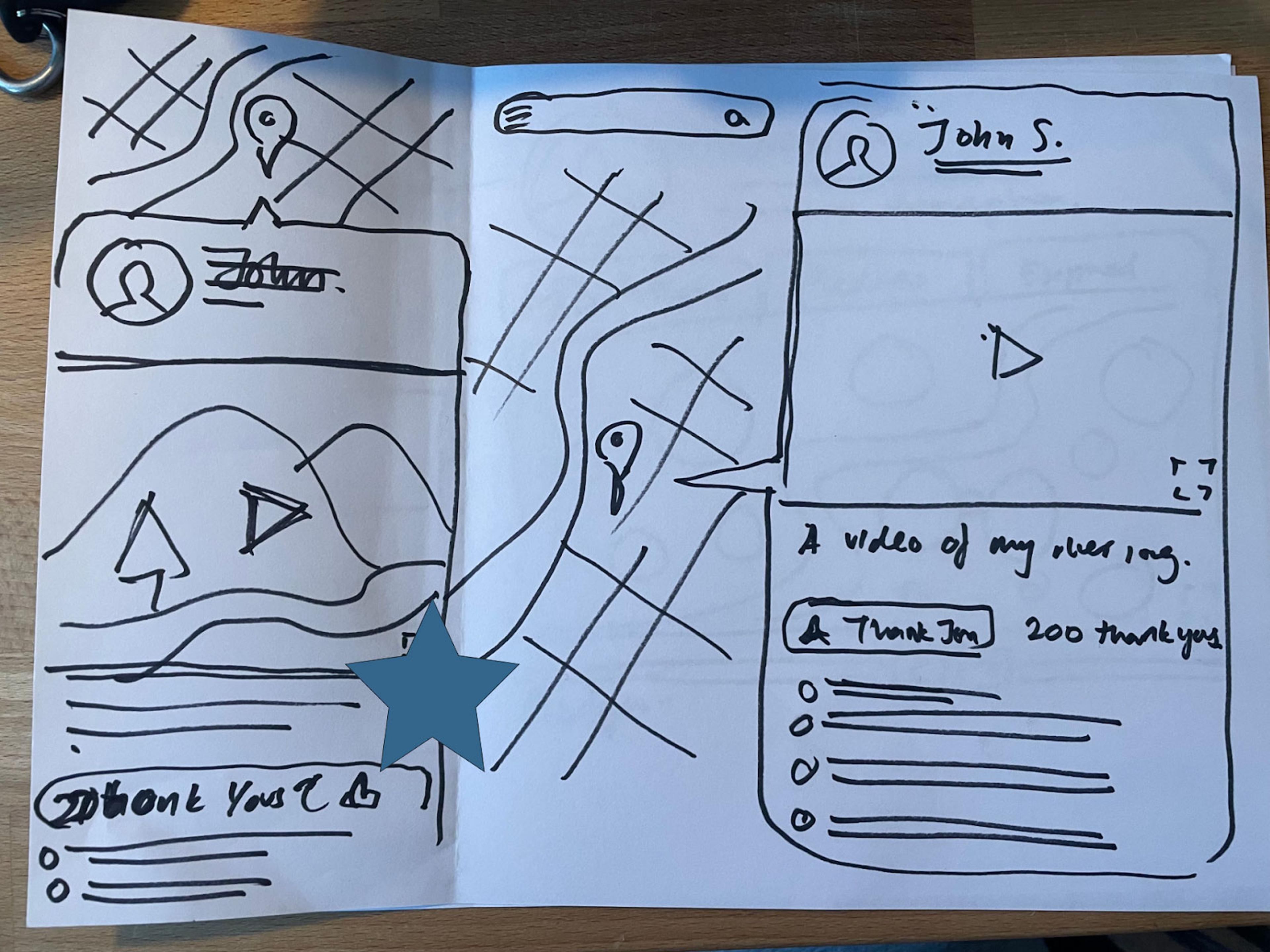
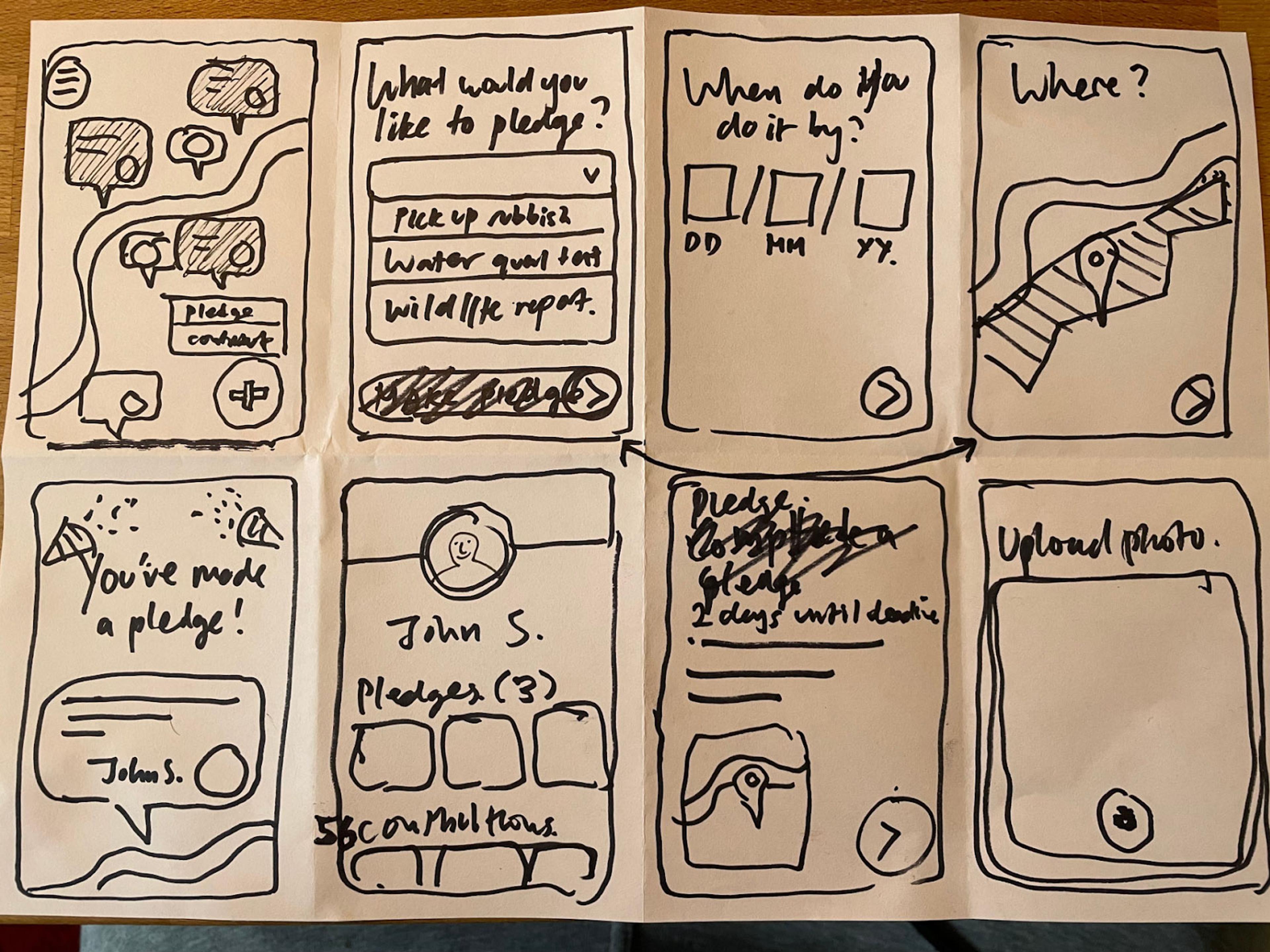
Based on the findings from our research and workshops, we were able to brainstorm and prioritise key features, and ran sketching workshops to jointly design and iterate the interface design before moving on to create an initial prototype.
These co-creation sessions are always our favourite parts of a project - they bring together the expertise of everyone involved, and bring out everyone’s creative side, whether they think they have one or not!
As so often when we run sessions like this, they start with an explosion of different ideas. Then, we share, discuss and iterate on new concepts and focus on the most effective approach and develop it further.

Interface Design
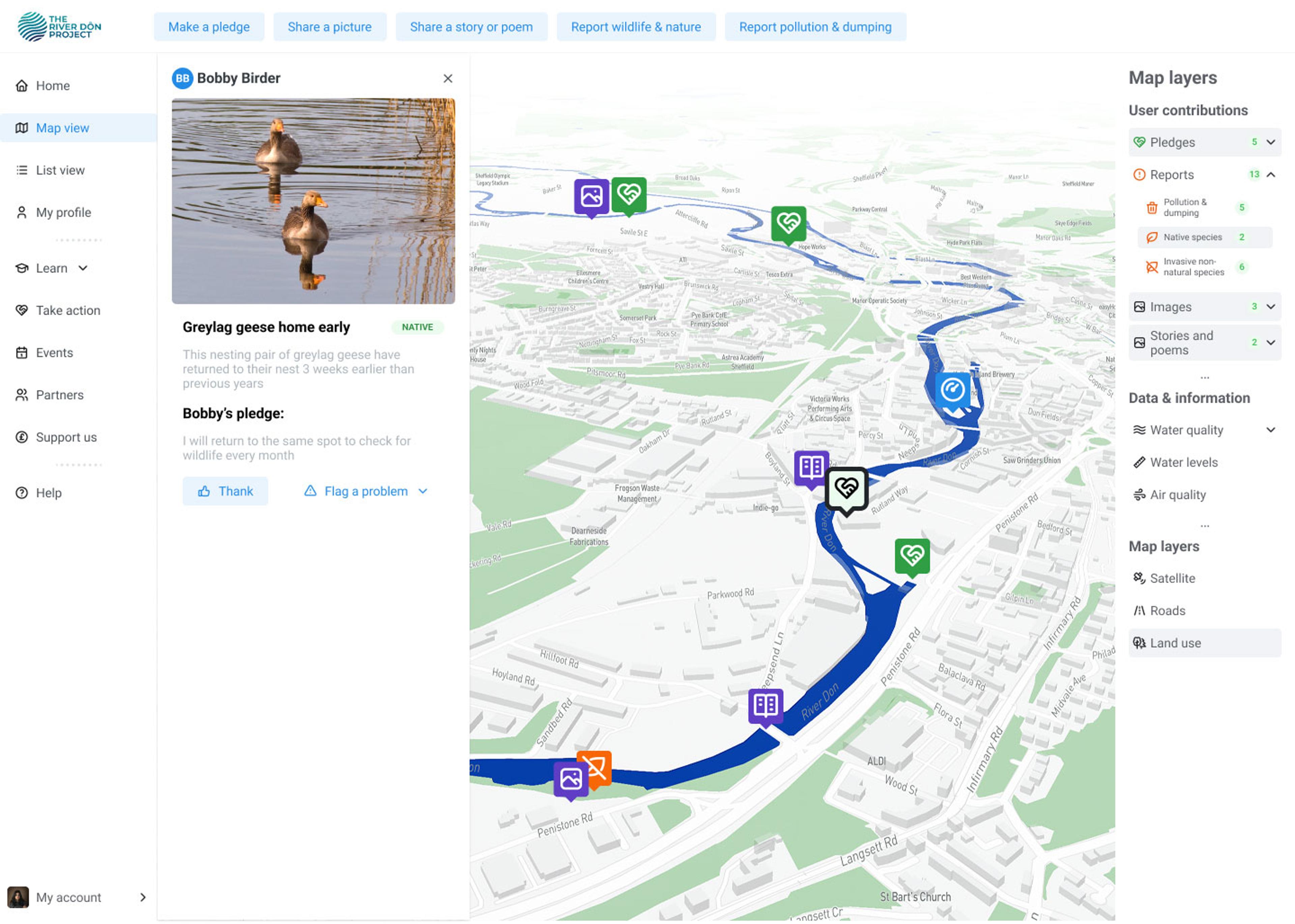
As the solution relied heavily on map-based interactions, we based the interface on successful patterns from modern navigation tools.
This meant:
- Instant familiarity for the users
- Intuitive understanding of complex concepts and features
- Simple and intuitive navigation
- Better focus on clarity and usability
The design and development teams worked closely to explore Front-End React libraries with strong Figma design systems and accessible components. This allowed us to quickly generate front-end concept designs and rapidly implement them, allowing us to test complex interactions and iterate where needed.

Build
For long-term flexibility and future integrations, we chose a modern, scalable and maintainable tech stack that would be easy to integrate with if we needed additional data layers and complementary platforms in future phases.
The tech stack we used is:
- Built using Next.js
- Vercel
- Sequelize
- Auth0
- Integrated with the Environment Agency API
The Solution
By creating the Engagement Platform, we’ve built one of the stepping stones for the wider River Don project; a series of platforms which will allow users to journey through, recognising and enhancing their experiences with the river, learning more about how they and others can support our waterways, getting feedback on their actions and starting to learn more about their impact.
We created a platform where anyone can:
- View contributions from others in the community.
- Create a personal profile and share their own observations, photos, stories and creative work.
- Report environmental issues such as dumping, pollution or invasive species.
- Explore river activity via an interactive map or in a Facebook-style view.
- See real-time river data, including rainfall, water levels and flow rate via the Environmental Agency API
- A “like” and “flag” mechanism where contributors can help keep the space safe, trusted and community-led.
What's Next
At the start of the project, we identified many different types of users, ranging from companies that are based on the riverside to farmers to anglers to school groups.
With the platform now live and gathering early data organically, the next phase will focus on:
- Qualitative and quantitative user research
- Understanding how different groups engage with the platform
- Identifying new features and improvements
In this next phase, we will collaboratively continue learning from the different user groups, such as:
- Riverside businesses
- Farmers
- Schools
- Community groups
- Residents in the local community and surrounding areas
We already have a feedback form linked from the engagement platform, but we plan to conduct some one-to-one user interviews with a cross-section of users, facilitate some group workshops, and send out a more tailored feedback form.
If you would like to check out the platform and try it out for yourselves and help us start collecting feedback, you can do so via the River Dôn Engagement Platform
Why this matters to us
Our mission is to create a positive, sustainable impact through thoughtful design and the right technology. This project represents exactly that.
We were able to use our skills to support environmental regeneration, encourage stewardship and help communities value the natural world around them. It is the kind of work that shows how digital tools can support real-world change.
We have hopefully brought a helping hand in bringing communities together to share their relationship with the river and highlighting not just the damage that has been done, but the small acts that we can all take towards restoring nature.
Let’s work together
We believe the best digital projects come from working with people, not just for them.
If you’re exploring how technology can support your community, protect the environment, or bring a new idea to life, we’d love to help.
Our team blends user-centred design, thoughtful technology and genuine collaboration to create tools that make a real difference. We do this for organisations, people and the planet.
Our services include research, design, and branding to develop accessible websites, software, and applications. We use the right tools and technology to bring your vision to life.
Whether you’re at the beginning of an idea or ready to take your next step, let’s start the conversation.
Let’s build something meaningful. Want to start a new project? Contact us here.